
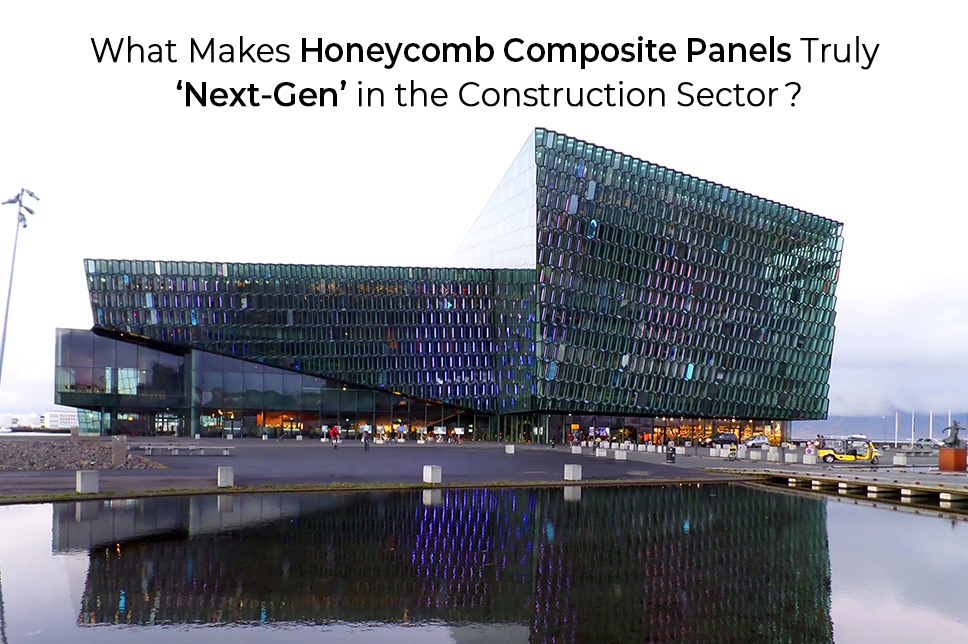
There was once an extremely primitive and simplistic approach to construction. If longevity was desired, the building needed to be extremely heavy. Stones were stacked, concrete slabs were laid, and heavy steel girders were used. The logic was that mass equals quality. But we’ve hit a wall with that way of thinking.
Between the skyrocketing costs of fuel to move all that weight and the urgent need to build faster, heavy has become a liability. What makes a material truly next-gen isn’t just that it’s new or high-tech; it’s that it finally breaks that old link between weight and strength.
We are seeing a move toward materials that are engineered to be clever rather than just thick.
More Carpet Area by Trimming the Wall Fat
If you’re in real estate, you know that the most expensive thing you own is air; specifically, the air inside your building that you can charge rent for. Traditional exterior walls are surprisingly thick, and every inch that wall pushes inward is an inch of floor space you can’t lease.
This is where Honeycomb Composite Panels are basically a cheat code for developers.
Through the adoption of hexagonal cores, which is also what nature employs to make hives rigid with very little wax, this panelling becomes highly stiff, yet remains extremely thin. The minute you replace heavy traditional cladding with such a product, you basically reduce the envelope of your structure.
Over a large commercial project, saving just two inches of wall thickness across the entire perimeter can add up to hundreds of extra square feet of usable area. That is pure profit generated solely by choosing a smarter material.
Speeding Up the Dry-In Phase
Perhaps the most frustrating aspect of any construction site is the issue of transportation. If you have to move large stones or steel plates, then you need large cranes and all kinds of specialized equipment and labor.
A material earns its next-gen title when it simplifies the lives of the people actually wearing the hard hats.
Because Honeycomb Composite Panels are so light, the installation process moves at a completely different pace. You can get a building dried-in (sealed off from the weather) weeks ahead of schedule.
For a project manager, those saved weeks mean lower costs for site security, less time paying for rented equipment, and a much earlier start for the interior crews.
In an industry where a one-month delay can cost millions in interest and overhead, the workability of these panels isn’t just a convenience; it’s a financial strategy.
Slashing the Monthly Electricity Bill
We have to talk about the long-term electricity bill. A building is basically a giant machine that tries to stay cool while the sun tries to bake it.
If your exterior material is a thermal bridge, meaning it just lets the heat crawl right through to the inside, your HVAC system is going to be running until it dies. Truly modern materials, like those you’ll find at Reynobond India, act as a natural buffer.
The air trapped inside those tiny hexagonal cells works like the vacuum layer in a high-end thermos. It creates a break that keeps the heat out in the summer and the warmth in during the winter.
This is a massive selling point for modern tenants. Companies today aren’t just looking at the rent; they are looking at the total cost of occupancy. A building that is naturally energy-efficient because of its skin is always going to be more attractive than a drafty, traditional one.
Protecting the New Building Look with Honeycomb Composite Panels
Real estate is a visual game. The moment a building’s facade starts to look tired: faded paint, rust streaks, or warped panels – the perceived value of the entire property drops.
Next-gen materials are built with advanced coatings that aren’t just sprayed on; they are chemically bonded to handle the worst of UV rays and city pollution.
It means the reputation of the building remains intact. It’s not something that would look beautiful in your brochures, but look horrible after five years from when the ribbon is cut. The composites offer curved lines and sharp corners. Maintaining that Grade-A look for decades is how you keep your rental yields high and your turnover low.
It’s about protecting the asset’s value long after the original construction team has moved on to the next job.
Cutting the Hidden Maintenance Tax
Finally, we have to look at the hidden tax of maintenance. Most traditional building materials require a constant cycle of cleaning, sealing, or repairing. Over thirty years, those small, minute maintenance costs can actually add up to more than the original cost of the material itself.
Eliminating the Maintenance Headaches
Next-gen Honeycomb Composite Panels are designed to be low-maintenance by nature. They don’t rust, they don’t rot, and they are tough enough to handle the everyday dings of a busy urban environment.
For a property owner or an investment trust, this is about peace of mind. You’re choosing a material that stays off the repairs list.
By investing in higher-quality, engineered panels today, you’re essentially pre-paying for a decade of zero headaches. The future of construction isn’t about building bigger or heavier; it’s about building with materials that are smart enough to take care of themselves.